In recent years, SAFe (Scaled Agile Framework) has become the lightning rod for criticisms of agile at scale. From startup veterans to enterprise reformers, many have echoed a now familiar refrain: “The first law of scaling is: don’t.” Their concern is understandable. Scaling often leads to process bloat, diminished autonomy, and a rigid interpretation of agility that seems to contradict the very first value of the Agile Manifesto: individuals and interactions over processes and tools.
But what if the problem isn’t scale itself, nor scaling frameworks, but how they’re implemented?
The Misuse of SAFe and the Origins of the Critique
It’s no secret that many SAFe implementations suffer from cargo culting: rigidly adhering to rituals and structures without deeply understanding their purpose. In such environments, process becomes a proxy for progress, and agility turns into bureaucracy. When SAFe becomes a checkbox exercise, it’s no surprise that practitioners experience more friction than flow.
Critics often forget that SAFe, like any framework, is a toolbox, not a mandate. It can be implemented with a heavy hand or a thoughtful touch. Unfortunately, many implementations lean toward the former.
A New Vector: SAFe Agile Product Management (APM)
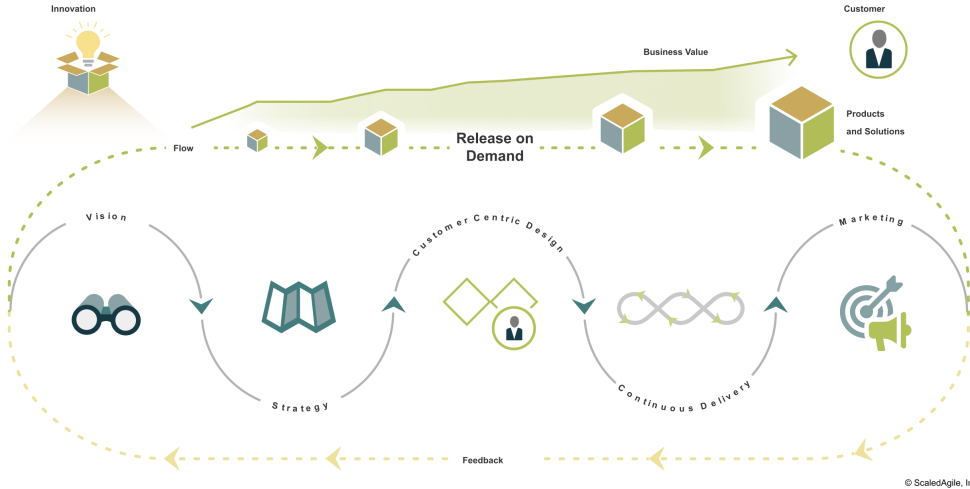
Figure 1: how SAFe APM argues innovation should be built into organisational processes
The recent evolution of SAFe, particularly through its Agile Product Management (APM) course, acknowledges these pitfalls. APM doesn’t just tweak the old machinery; it reorients the system toward continuous value delivery, cross-functional collaboration, and meaningful product thinking.
Where traditional scaling efforts often conflate activity with impact, SAFe APM shifts the focus from outputs to outcomes. It challenges organizations to define value more explicitly and organize around the flow of that value. The above visualization of SAFe APM, placing learning and feedback loops at the heart of product development, is a meaningful step away from static roadmaps and batch delivery cycles.
Product Thinking: The Bridge Between Vision and Flow
One of the most promising contributions of SAFe APM is its emphasis on product thinking. Rather than fragmenting strategy, design, and delivery across disconnected functions, APM brings them together under a shared purpose: delivering meaningful, validated impact.
The disciplines embedded in SAFe APM, such as Product Development Flow, Outcome-Oriented Roadmapping, and Strategic Positioning, reflect a maturing view of agility at scale. These aren’t just new practices; they represent a shift in mindset from project to product, from plans to learning, from silos to streams.
Purposeful Scaling, Not Mindless Expansion
So is scaling agile doomed to fail? Not necessarily. But it does require a level of intentionality that many organizations underestimate. Frameworks like SAFe should serve strategy, not substitute it. When the goal becomes implementing SAFe instead of delivering value, the tail is wagging the dog.
A more productive question than “Should we scale?” might be: “What are we scaling, and why?” If the answer involves alignment, faster learning, and sustainable delivery of customer value, then SAFe APM offers pragmatic tools to get there.
Concrete Starting Points for Delivering Value at Scale
For product managers, product owners, and agile leaders navigating the challenges of scale, here are several concrete starting points to help regain focus on delivering value:
1. Define the Product Clearly: Align teams and stakeholders around a shared understanding of what the product is, who it serves, and why it matters. Without this, value becomes an abstract concept instead of a guiding principle.
2. Organize Around Value Streams: Identify and structure teams to align with the flow of customer value rather than internal functions. Breaking down silos enables better collaboration and faster learning across disciplines.
3. Think in Outcomes, Not Output: Shift conversations from “what are we building” to “what change are we trying to create.” Define measurable outcomes that tie to customer impact and business goals.
4. Build Feedback Loops into the Flow: Make learning a continuous part of the process. Use customer insight, experimentation, and continuous team improvement to adapt, not just deliver.
5. Position the Product Strategically: Understand how your product fits within the broader business model and organizational goals. Product work should be clearly aligned with business goals – why work on the product in the first place if this connection is missing? Strong product positioning helps prioritize work that truly matters.
Final Thoughts
SAFe isn’t inherently broken. Nor is it inherently agile. It’s a framework: flexible, extensible, and fallible. What matters is how we apply it. With the emergence of SAFe APM, there’s a renewed opportunity to reconnect strategy with execution, process with purpose, and teams with the outcomes that matter.
Frameworks should invite critical thinking, not blind adherence. They should encourage teams to adapt, not conform. Putting any framework to good use (especially at scale) requires thoughtful customization, deep understanding, and ongoing learning. It’s hard work. But if done well, it’s the kind of work that restores flow, sharpens focus, and ultimately delivers real value.
In the end, scaling is neither good nor bad. It’s a choice. The real challenge is making that choice consciously and designing for flow, not friction.